Industria del vidrio ·
What is flat glass and what is it used for?
What flat glass is, how the float process produces it, and how further processing makes it suitable for windows, façades, furniture and other applications.
Flat glass is used in windows, façades, doors, furniture and many industrial products. It also has applications in vehicles, solar energy, decoration and technology. Its final use depends on the glass type, thickness and chosen treatments or composition.
Flat glass and float glass: what the terms mean
Flat glass describes a product in sheet form. Float glass takes its name from the process used to manufacture it. The terms are related, but not all flat glass is made by the same process.
In the float process, molten glass spreads over a bath of molten tin to form a ribbon with a flat surface. The tin provides a supporting bath; it should not be described as an ingredient mixed into the glass to make the sheet.
Glass is supplied in different thicknesses and sheet sizes. It is a hard, brittle inorganic material: its behaviour depends on composition, dimensions, edge condition, treatments and installation.
Properties worth distinguishing
Density, hardness and thermal expansion matter when selecting and processing glass. Viscosity and surface tension are particularly relevant when shaping it while hot. A transparent sheet with a smooth surface does not, by itself, establish its strength or thermal and acoustic performance.
Where is flat glass used?
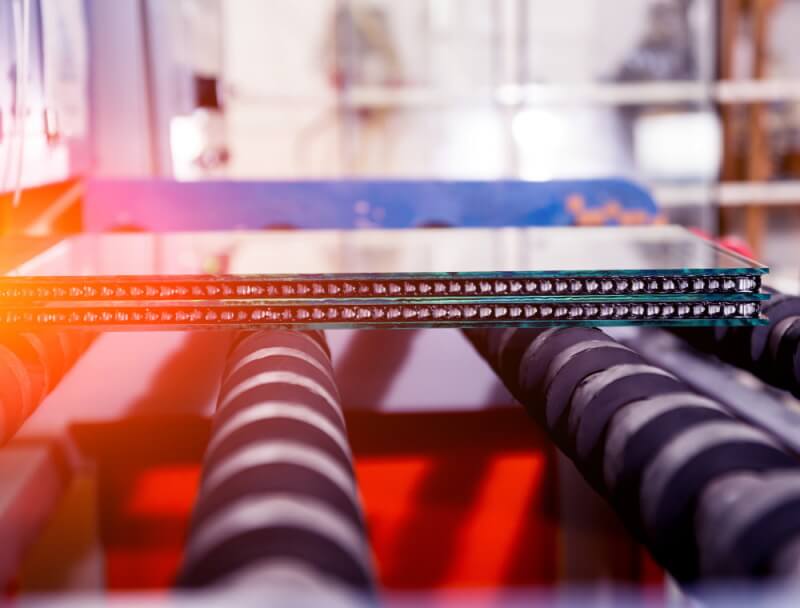
In construction and architecture it appears in windows, façades, doors and internal partitions. It can form part of insulating glass units, whose performance depends on the complete glazing assembly. In vehicles, different glass compositions are used for windscreens, side windows and roofs.
It is also processed for tables, cupboards, mirrors and other decorative elements, as well as photovoltaic, optical and electronic applications. Some processes bend glass using heat; this should be distinguished from using an untreated flat sheet.
Treatments, compositions and finishes
Different base glasses are used to produce annealed, toughened, heat-strengthened and laminated glass. Reflective or solar-control coatings, screen printing, painting, acid etching and sandblasting provide other options. Patterned and wired glass have their own production processes and characteristics.
These terms are not equivalent categories and do not guarantee a particular performance on their own. Safety, security, thermal and acoustic solutions must be selected according to their composition, declared performance and intended application.
From material to processing work
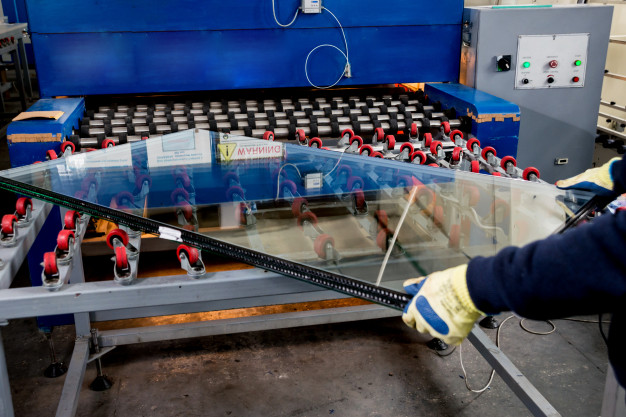
At a glass processing company, each sheet becomes order positions with dimensions, quantities and operations. Keeping that definition clear helps prepare work and compare cutting alternatives.
Explore how Dimpro CW organises that workflow and how VS.cut prepares cutting plans. To review the process with orders from your business, contact Vidrioservice.
From the Vidrioservice archive, originally published on 5 March 2021 and reviewed for Showcase in October 2026.