Industria del vidrio ·
How is laminated glass made?
Materials, preparation and typical stages of laminated glass production: the role of the interlayer and the information worth keeping throughout manufacturing.
Laminated glass consists of two or more glass sheets bonded with one or more interlayers. It is used in architecture, vehicles, decoration and other applications that require a specific composition.
Materials and compositions
The sheets may be clear, tinted, coated or treated in ways compatible with the intended composition. They may have the same or different thicknesses. Annealed, heat-strengthened or toughened glass may be used, depending on the product being manufactured.
Common interlayers include PVB, polyvinyl butyral, and EVA, ethylene-vinyl acetate copolymer. Transparent, translucent and coloured options are available, alongside other materials for specific applications. The choice affects processing and the performance of the assembly.
Decorative compositions may incorporate fabrics, prints or other elements, provided they are compatible with the glass, interlayer and chosen process. Adding a material does not guarantee that the assembly retains the performance of a previously tested composition.
Preparation and manufacturing
Work starts by defining the composition: dimensions, thicknesses, interlayer type and number, and the operations required. The sheets must reach assembly with the specified preparation and clean surfaces, avoiding contamination between the layers.
A common industrial PVB process involves assembling the glass and interlayer, de-airing or pre-laminating the assembly, and completing the cycle in an autoclave. Settings must follow the instructions for the system in use; consult the interlayer manufacturer’s technical manuals.
Not every composition requires the same equipment. Some systems, including certain EVA films, support vacuum-oven lamination. The procedure and checks must suit the particular material; a recipe for another product should not be transferred automatically.
The result is checked at the end, and the job identification is retained. Lamination bonds the sheets through the interlayer; it does not melt the glass sheets into each other. A visual finish check does not replace the verification required for declared performance.
Behaviour on breakage and applications
The interlayer helps hold fragments together if the glass breaks. The level of protection depends on composition and intended use, as explained in Saint-Gobain’s laminated glass documentation. Not every laminate should be presented as universally safe or resistant to any impact.
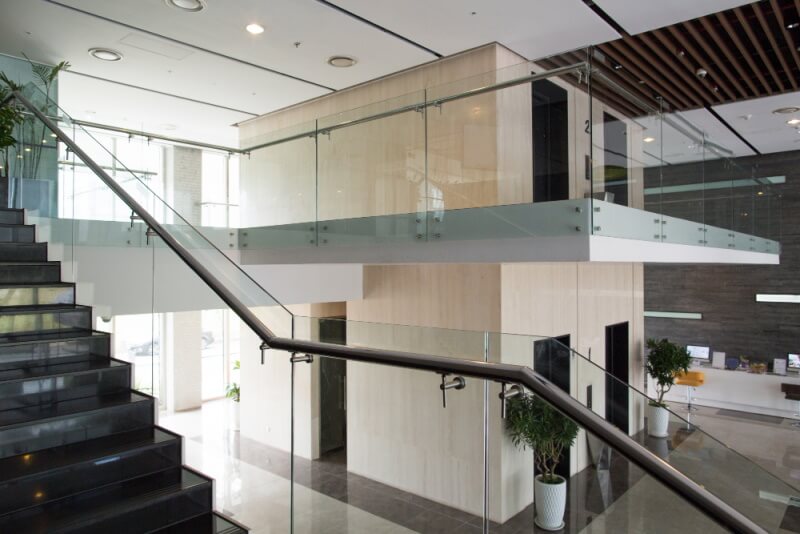
Applications include glazing, shopfronts, internal partitions, rooflights and certain balustrade or stair-tread solutions. Each application requires an appropriate composition and installation. Acoustic insulation and resistance to attack are specific performance characteristics, not automatic consequences of laminating two sheets.
The information that accompanies production
When preparing work, each order position should be linked to its dimensions, quantities, composition, operations and required date. If an incident or remake occurs, that reference helps identify what needs to be manufactured again.
Explore batch planning in Dimpro Prod and shop-floor activity tracking in VS.floor. To review this workflow with your process, request a demonstration.
From the Vidrioservice archive, originally published on 16 March 2021 and reviewed for Showcase in October 2026.